What is SI? Super intelligence, the new name for AI, explained (2026)
Updated October 2026 · 12 min read
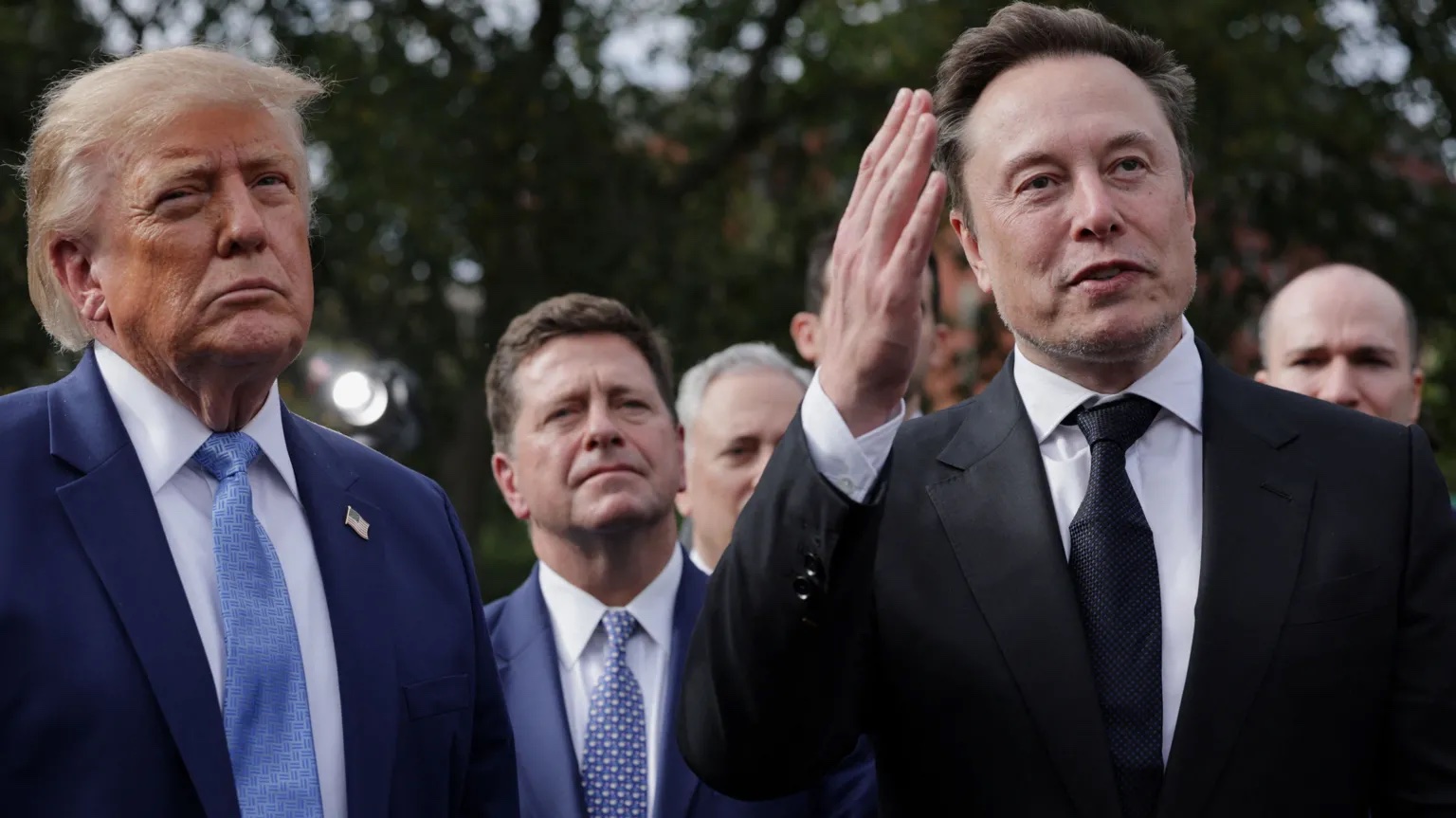
SI stands for super intelligence. On Tuesday 29 September 2026, in the East Room of the White House, President Trump signed an executive order titled "Inaugurating the Era of Super Intelligence". It directs every federal department and agency to say "super intelligence" and "SI" in place of "artificial intelligence" and "AI" in its correspondence, public communications, websites, reports and policy documents. The technology is the same. ChatGPT, Claude, Gemini, Perplexity and Copilot did not change, and neither did the referral traffic they send to your site. What changed is the word, and words are what people type into search boxes and ask assistants about.
We build Clerion, web analytics for AI founders, and we count referrals from those assistants as their own channel. This page sets out what happened in Washington that day, what the order does and does not cover, what the six companies in the room signed, and what we did about it, including registering clerion.si.
What happened on 29 September
The day had three parts. In the morning, House Speaker Mike Johnson hosted a summit with technology leaders on Capitol Hill. In the afternoon the executives moved to the White House, where the President signed the order and the companies signed a separate accord. The same day the administration launched America.gov, a chatbot interface for government services, which Newsweek reported alongside the order.
The idea was a week old by then. On 22 September the President had told the UN General Assembly that the technology should be renamed, in words Newsweek quoted again on signing day: "The use of the word artificial makes intelligence fake, it makes it sound fake and it is not fake. It's actually amazing." Axios reported from New York that he was directing "all United States documents" to use the new term. At the signing, to Fox Business he put the strategic case in one line: "Whoever wins AI, you have to remember this, and now I say whoever wins SI, whoever wins superintelligence, wins." POLITICO cut the moment into a short:
The order itself, as the White House fact sheet summarises it, argues that today's systems "far exceed what was envisioned when the term 'Artificial Intelligence' first came into use" and that the name super intelligence "conveys the true capabilities of the technologies being developed today".
What the executive order says
The operative text is short. Section 2 directs executive branch agencies to use "Super Intelligence" and "SI" in official correspondence, public communications, websites, reports, policy documents and other non-statutory materials, and states that the executive branch "will not acknowledge the usage of 'Artificial Intelligence' and 'AI' in any applicable setting", a phrase The Register singled out.
It also sets a clock. Michael Kratsios, the Assistant to the President for Science and Technology, has 60 days, to 28 November 2026, to propose statutory language defining the new terms and to assess whether that definition should modify or replace the existing federal definition of artificial intelligence in 15 U.S.C. § 9401(3). Law firm Freshfields has the section-by-section reading, which is the clearest account of the mechanics we found.
| Covered by the order | Not covered |
|---|---|
| New federal correspondence, press releases and speeches | Statutes passed by Congress, which still say "artificial intelligence" |
| Agency websites, reports and policy documents | Previously issued regulations and presidential actions |
| Solicitations, forms and grant notices going forward | Existing contracts, grants and historical documents |
| The executive branch of the US government | Companies, universities, the press, and every other government |
That last row is the one most people miss. The order binds federal documents. It does not require any private business to change a word. A company that sells "AI analytics" may keep calling it that; a company that sells to the government should expect the forms it fills in to say SI from now on. Forbes and TechRepublic both make the same point: what actually changes is the vocabulary of government, not the technology or the law.
The accord the six companies signed
The order was signed alone. The second document, the White House Accord on Super Intelligence, was signed by six executives: Sundar Pichai of Google, Dario Amodei of Anthropic, Mark Zuckerberg of Meta, Jensen Huang of Nvidia, Greg Brockman of OpenAI and Elon Musk for X. Jeff Bezos and Satya Nadella were in the room for the day's meetings, per Newsweek.
The accord is voluntary. Per Freshfields it asks each signatory to run internal controls over its most capable systems, to keep monitoring processes, to commission independent external assessments and to put oversight at board level. It creates no legal obligation and has no enforcement mechanism. The President called it "morally binding". Speaker Johnson called it a "statement of principles". Zuckerberg, posting on X, called it "a significant positive step that the leaders of every major American lab have committed to implementing robust internal controls."
Not everyone agreed. Senator Richard Blumenthal of Connecticut told Fox News the accord was "worse than ineffectual" because "it accomplishes nothing, but it seems to give Congress a free pass." Jean-Pierre Dubé, a marketing professor at the University of Chicago, told Newsweek the new term would confuse people and was unlikely to catch on unless the industry's leaders adopted it themselves. None of the six companies had renamed a product by the time this page was written.
How the US got here
The rename is the third step in a sequence rather than a bolt from the blue.
- January 2025. On his first day back in office the President revoked the previous administration's 2023 order on AI risk, which had required developers of the largest models to share safety test results with the government. TechRadar covered the revocation at the time.
- June 2026. A further executive order on "artificial intelligence innovation and security" was issued, still using the old term, a point The Register makes: three months before the rename, the White House's own paperwork said AI.
- 22 September 2026. At the UN General Assembly in New York the President said "artificial" made the technology "sound fake" and called for the term super intelligence, as Reuters reported.
- 29 September 2026. The rename, the accord and America.gov, in one afternoon.
The word itself is older than the order. Nick Bostrom's 2014 book Superintelligence: Paths, Dangers, Strategies made it a term of art for a system that outperforms humans at nearly every cognitive task. Ilya Sutskever named his company Safe Superintelligence in 2024, and Meta reorganised its research under a Superintelligence Labs banner in 2025. What the order did was take a word that had meant "a hypothetical future system" and apply it to every system the government already uses, from a spam filter upwards. That gap is what the critics are pointing at, and it is also why the two terms will coexist for a long time.
SI and AI are the same technology
Nothing about a model, a product or a crawler changed on 29 September. GPTBot still fetches pages for OpenAI, ClaudeBot for Anthropic, PerplexityBot for Perplexity. ChatGPT still sends visitors from chatgpt.com, and Gemini from gemini.google.com. If you measure referrals from assistants as a channel, the channel is the same channel; it now has two names.
The practical difference is in language, and it will show up in three places over the next year.
| Where | Before | Now |
|---|---|---|
| Federal documents, grants, procurement | AI, artificial intelligence | SI, super intelligence |
| Search queries | "AI analytics", "AI traffic", "can AI see my site" | both, with SI queries starting from zero |
| Assistant answers | "AI assistants" | models read both terms as synonyms, but they can only cite pages that use the words a person asked with |
The last row is the one that matters for a site. An assistant asked "which analytics tool shows SI traffic" retrieves pages that contain the phrase. If every page you own says AI and none says SI, you are retrievable for one version of the question and invisible to the other.
What to do on your own site
Add the second name next to the first. Do not replace it: the volume of searches is still overwhelmingly on AI, and renaming every page would throw away the rankings those pages have. The pattern that reads naturally is to state both once on each page where the term carries meaning, so that a search for either reaches the same page.
- On the page that defines your category. If you sell an "AI analytics" tool, say once that it is an AI (now also called SI, super intelligence) analytics tool. Once is enough; a model reading the page does not need it repeated.
- In your machine-readable files. llms.txt and any context file you publish for assistants should name SI as a synonym in the opening paragraph, which is the part most often quoted. Ours is at getclerion.com/llms.txt.
- In structured data. Add the SI phrasing to the
keywordsandknowsAboutfields of your Organization and SoftwareApplication schema, where the unbranded category terms already live. How to make your website readable by AI crawlers covers the rest of that checklist. - In your help centre. One question, "Is AI now called SI?", with a factual answer, is the fastest way to be the page an assistant quotes when a customer asks. How to get your startup recommended by ChatGPT explains why a plain question-and-answer page gets cited.
Then measure it. Referrals from assistants arrive the same way they did last week, so a tool that already breaks ChatGPT, Perplexity, Claude, Gemini and Copilot out as a channel needs no setting changed. How to track ChatGPT traffic to your website covers the setup in each tool, and analytics for an AI startup lists the six numbers worth watching from day one. Whether the assistants can read your site at all is a separate question; the free AI crawler checker answers it in ten seconds.
The .si domain
.si is the country code domain for Slovenia, run by the national registry, ARNES, since 1992. Registration is open to anyone, with no residency or company requirement, for one to three years at a time, and mainstream registrars such as Hostinger list it at under twenty dollars a year at the time of writing. It is now also read as SI, which is why the ending is being registered far outside Slovenia; unlike .ai, short names are still available.
The rush was fast enough to be a story of its own. The Register quotes venture capitalist Adam Cochran counting roughly 12,000 politically themed and more than 10,000 AI-related .si names registered around the announcement, with some already relisted for millions of dollars. The Register adds that there is no evidence tying those registrations to anyone connected with the order.
We registered clerion.si on the day of the order. It points at getclerion.com, so the product has one home and two addresses. We did not change our name, our headline or what we count. Clerion is web analytics for AI founders, and for SI founders, which are the same people.
If you register a .si domain for your own product, make it a permanent redirect to your main site rather than a second copy of it. Two copies of the same pages split your search signals; one redirect adds a door without adding a house. The rules, the prices next to .ai, and the Google geotargeting catch are in things to know before you buy a .si domain.
Frequently asked questions
What does SI stand for?
Super intelligence. Since the executive order of 29 September 2026, it is the term the US federal government uses for what was previously called artificial intelligence, or AI.
Is AI officially renamed to SI?
Within the US executive branch, yes: agencies must use "super intelligence" and "SI" in new official communications, websites, reports and policy documents. Outside government the order has no force. Companies, universities and the press choose their own words, and most still say AI.
Does the order apply to my company or my website?
No. It directs federal departments and agencies only. It does not change statutes, existing regulations, contracts, grants or historical documents, and it does not require any private business to change its wording. If you sell to the US government, expect its forms and solicitations to say SI.
Who signed the White House Accord on Super Intelligence?
Sundar Pichai (Google), Dario Amodei (Anthropic), Mark Zuckerberg (Meta), Jensen Huang (Nvidia), Greg Brockman (OpenAI) and Elon Musk (X), on 29 September 2026. It is a voluntary commitment to internal controls, external assessments and board oversight, with no legal enforcement.
Is SI traffic different from AI traffic?
No. The visitors referred by ChatGPT, Perplexity, Claude, Gemini and Copilot are the same visitors from the same assistants. SI traffic and AI traffic are two names for one channel. Clerion reports it as its own channel next to search, social, direct, email, paid and referral.
Should I rename AI to SI on my site?
Add SI next to AI rather than replacing it. Most searches still use AI, and a page that mentions both terms is reachable from either. Replacing the term everywhere would cost the rankings your pages already have.
What is clerion.si?
clerion.si is a second address for Clerion, the web analytics product at getclerion.com. It redirects to getclerion.com. Same product, same company, same team.
Should I register a .si domain?
If a short, memorable name is available and you want a second door for people who think in SI, yes; it is inexpensive and open to anyone. Point it at your main site with a permanent redirect rather than hosting a copy.